


The Dishwasher Test: How to Know If a Plastic Wine Glass Will Still Look Good After 50 Washes

You've been there: you buy a set of plastic wine glasses for a party, they look great that first night, and then three dishwasher runs later they've gone from translucent and pretty to hazy, slightly warped, and a little sad. The label that said 'dishwasher safe' wasn't lying, exactly — it just wasn't telling the whole truth.
'Dishwasher safe' means the cup won't melt or crack in a single cycle. It says nothing about how the glass looks after cycle 10, 20, or 50. That gap is where cheap plastic drinkware quietly fails you.
What Actually Happens to Low-Grade Plastic in the Dishwasher
The dishwasher is a surprisingly brutal environment — hot water, high-pressure jets, alkaline detergent, and then a heated drying cycle. For plastic that isn't built to handle it repeatedly, a few things happen:
- Clouding. The surface of the plastic micro-scratches and etches from detergent chemistry and abrasion. Light no longer passes through cleanly, so a once-clear glass starts to look milky or dull. This is the most common complaint with budget plastic stemware.
- Warping. Lower-grade plastics soften at the temperatures a heated dry cycle reaches. The bowl stays roughly round, but the base or stem can shift just enough that the glass no longer sits flat — which is annoying at best and a spill risk at worst.
- Label and print fade. If the cup has any surface printing or color treatment that wasn't designed for repeated hot-water exposure, it starts peeling or fading. The color that looked great in the store photo looks washed out by summer's end.
None of this happens dramatically. It's a slow, wash-by-wash degradation that you only notice when you pull the glasses out for a gathering and realize they look nothing like they did when you bought them.
The Three Things That Actually Predict Long-Term Durability
When you're evaluating whether a plastic wine glass will genuinely hold up — not just survive — repeated dishwasher cycles, these are the factors that matter.
1. Material Quality
Not all food-grade plastics behave the same under heat and detergent. The material composition determines how resistant a cup is to the etching, softening, and chemical breakdown that causes clouding and warping. A cup built from high-quality, BPA-free plastic that's been specifically engineered for reuse — rather than a generic food-safe grade — is going to come out of the dishwasher looking like itself far longer. The Red Cup Living stemware, for example, is made from high-quality ABS plastic, which is notably tougher and more heat-stable than the polystyrene or thin polypropylene you find in cheaper party drinkware.
2. Rack Position
Even a well-made plastic glass benefits from the top rack. The heating element in most dishwashers sits at the bottom, so the temperature at the bottom rack is meaningfully higher than at the top — and that difference matters for plastic. Top-rack placement also reduces exposure to the most aggressive water jets. If a brand specifies top-rack only, that's not a weakness; it's the brand being honest about how to get the most life out of the cup. If a brand says nothing about rack position, that's a flag worth noting.
3. A Real Wash-Cycle Rating
This is the clearest signal of all, and most cheap plastic drinkware won't give you one because the number wouldn't be impressive. A brand confident enough to publish a specific wash-cycle durability rating — and back it up with quality materials — is telling you something meaningful about how the product was designed and tested.
The Red Cup Living 14oz Shatterproof Wine Cups are rated dishwasher safe for up to 1,000 wash cycles. That's not a marketing rounding — it reflects the material construction and finish quality that go into the cup. Run it through the dishwasher twice a week and that rating covers roughly a decade of use.
Why the 'Looks Like Glass' Part Matters More Than You Think
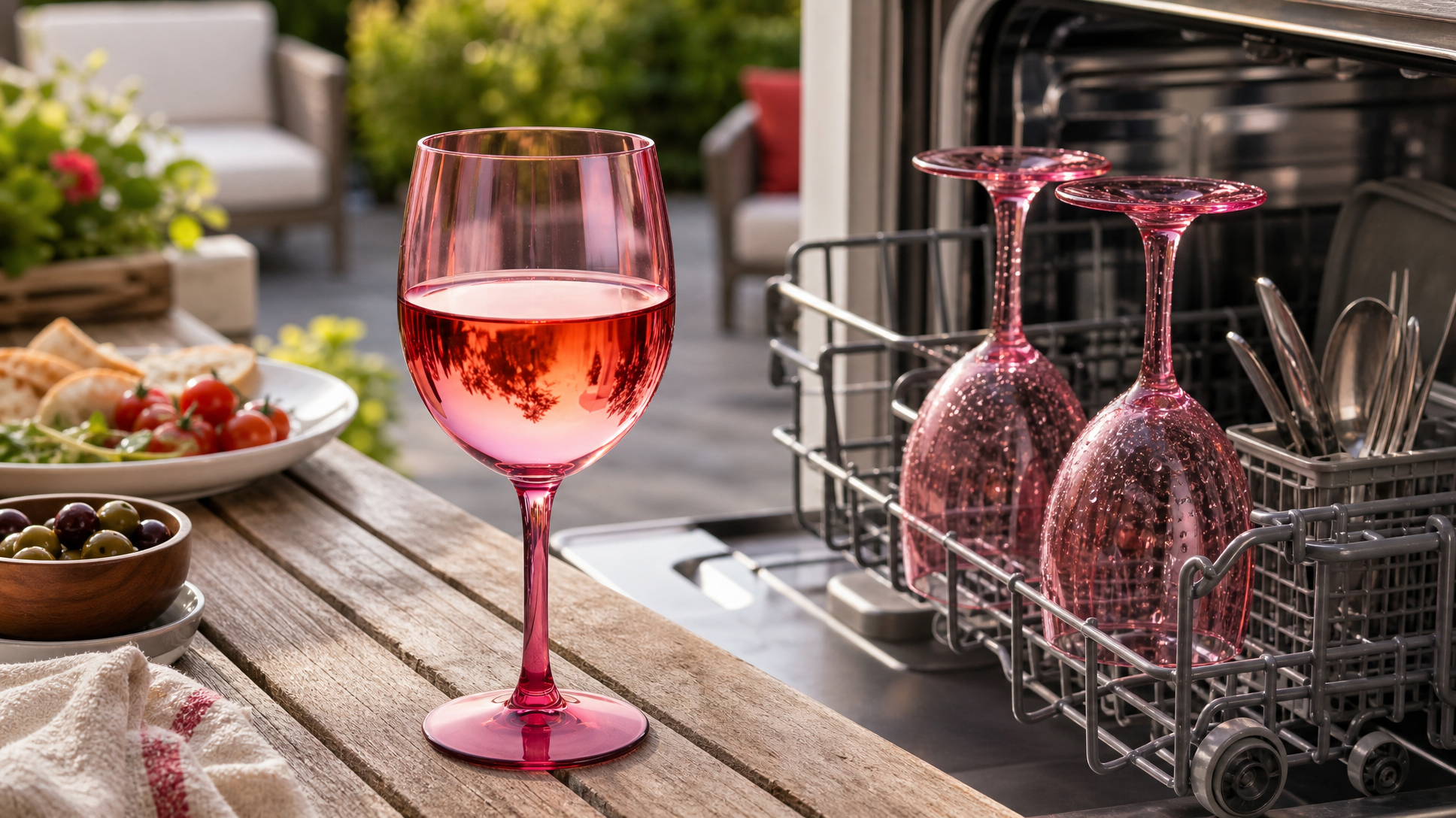
There's a specific frustration with outdoor entertaining and plastic stemware: you want the vibe of a real wine glass — the stem, the bowl shape, the way rosé looks in proper stemware at golden hour — without the very real risk of glass shattering on a patio, poolside, or campsite. The problem is that most plastic wine glasses either nail the look but fall apart after a few uses, or they're durable but look so obviously plasticky that they kill the aesthetic.
The Red Cup Living stemware threads that needle. The translucent pink-tinted bowl and slender stem genuinely read as stemware — not a novelty cup — and the ABS construction means it's shatterproof and stays that way. It's the kind of glass you can hand to a guest at a backyard dinner party without anyone doing a double-take.
A Quick Checklist Before You Buy
Next time you're evaluating plastic wine glasses — for a party, a camping trip, or just to stop replacing cheap ones every season — run through this:
- Does the brand name the material? Vague 'food-grade plastic' language is a skip. Named, quality materials are a green flag.
- Is it BPA-free, confirmed? Non-negotiable for anything going in the dishwasher repeatedly.
- Is there a wash-cycle rating? If yes, take it seriously. If no, assume the answer isn't flattering.
- Does it specify rack position? Top-rack guidance is honest; no guidance at all is a gap.
- What do repeat buyers say about appearance over time? First impressions are easy. Durability shows up in reviews from people who've owned the product for months.
The Red Cup Living stemware checks all five. And at a mid-range price point designed for buying in sets — because you're probably not hosting with just two glasses — it's the kind of investment that actually pays off over a full party season.
Ready to stop replacing flimsy plastic stemware every summer? The 14oz Shatterproof Wine Cups are built to last — rated for up to 1,000 dishwasher cycles, BPA-free, and genuinely elegant enough to use at any gathering. Shop Party Wine Cups at Red Cup Living and buy a set that'll still look great when next summer rolls around.
Frequently Asked Questions
What does 'dishwasher safe up to 1,000 cycles' actually mean in practice?
It means the cup has been designed and tested to maintain its appearance and structural integrity through that many wash cycles without clouding, warping, or cracking. It's a durability benchmark — the higher the number, the more confidence the manufacturer has in the material quality. For most households running the dishwasher a few times a week, a 1,000-cycle rating translates to years of regular use.
Top rack vs. bottom rack — does it really make a difference for plastic wine glasses?
Yes, meaningfully so. The heating element in most home dishwashers sits at the bottom of the machine, which makes the bottom rack significantly hotter during the drying cycle. That extra heat is one of the main causes of warping and softening in plastic drinkware. Top-rack placement keeps your glasses away from the most intense heat and the strongest water jets, which extends their life and helps them keep their shape wash after wash.
Why do some plastic wine glasses go cloudy after a few washes?
Clouding happens when the surface of the plastic gets micro-etched by alkaline dishwasher detergent and abrasive water jets over repeated cycles. Lower-grade plastics are more susceptible because their surface isn't as resistant to that chemical and physical wear. High-quality materials — like the ABS plastic used in Red Cup Living stemware — are more resistant to this kind of surface degradation, which is why they stay clear and attractive through many more cycles.
Can I use these plastic wine glasses for drinks other than wine?
Absolutely. The 14oz stemmed design works well for sparkling water, cocktails, mocktails, juice, or really any beverage you'd enjoy in a stemmed glass. The shape and size make them versatile beyond wine, which is part of what makes them practical for parties where guests have different drink preferences.