


The Eco-Conscious Parent's Guide to Buying a Sippy Cup That's Actually Reusable

Every parent has a graveyard of sippy cups somewhere. The cracked ones under the sink, the warped lids that no longer seal, the three identical cups you bought because the first two didn't make it past the six-month mark. You bought them thinking you were doing the right thing — reusable, right? — but somewhere between the dishwasher and the kitchen floor, "reusable" turned out to mean "lasts until it doesn't."
Here's the thing: a cup that survives ten uses isn't really a reusable cup. It's just a disposable cup with better marketing. If you're trying to reduce plastic waste and keep your toddler safe, the material specs on the label actually matter — and most product pages don't explain what they mean in plain English.
This post does exactly that.
What "BPA-Free" Actually Means (And Why It's Not Enough on Its Own)
BPA — bisphenol A — is a chemical that was widely used in hard plastics for decades. The FDA has restricted its use in baby bottles and sippy cups since 2012, so most cups on the market now carry a BPA-free label. That's a baseline, not a differentiator.
The part that often gets left off the label is phthalates. Phthalates are a separate family of chemicals used to make plastics more flexible. They're a legitimate concern in children's products, and a cup that's BPA-free but not phthalate-free hasn't fully addressed the safety picture. If you're choosing a sippy cup for a toddler, look for both claims — BPA-free and phthalate-free — not just one.
The Red Cup Living 8oz Sippy Cup is made from materials that are both BPA-free and phthalate-free. That's the floor, not the ceiling — but it's a floor worth confirming before you buy anything.
What Is ABS Plastic, and Why Does It Matter for a Toddler Cup?
ABS stands for acrylonitrile butadiene styrene — a premium-grade engineering plastic used in products that need to take a beating. It's the same category of material used in protective gear and hard-shell luggage. For a sippy cup, that translates to one practical thing: it doesn't crack when your toddler hurls it off the high chair tray.
Most budget sippy cups are made from thinner, cheaper plastics that look fine in the store but develop hairline cracks after a few months of dishwasher cycles and floor impacts. Once a cup cracks, it's done — bacteria can hide in the crevices, the seal fails, and you're buying another one. That's the cycle that makes "reusable" feel like a lie.
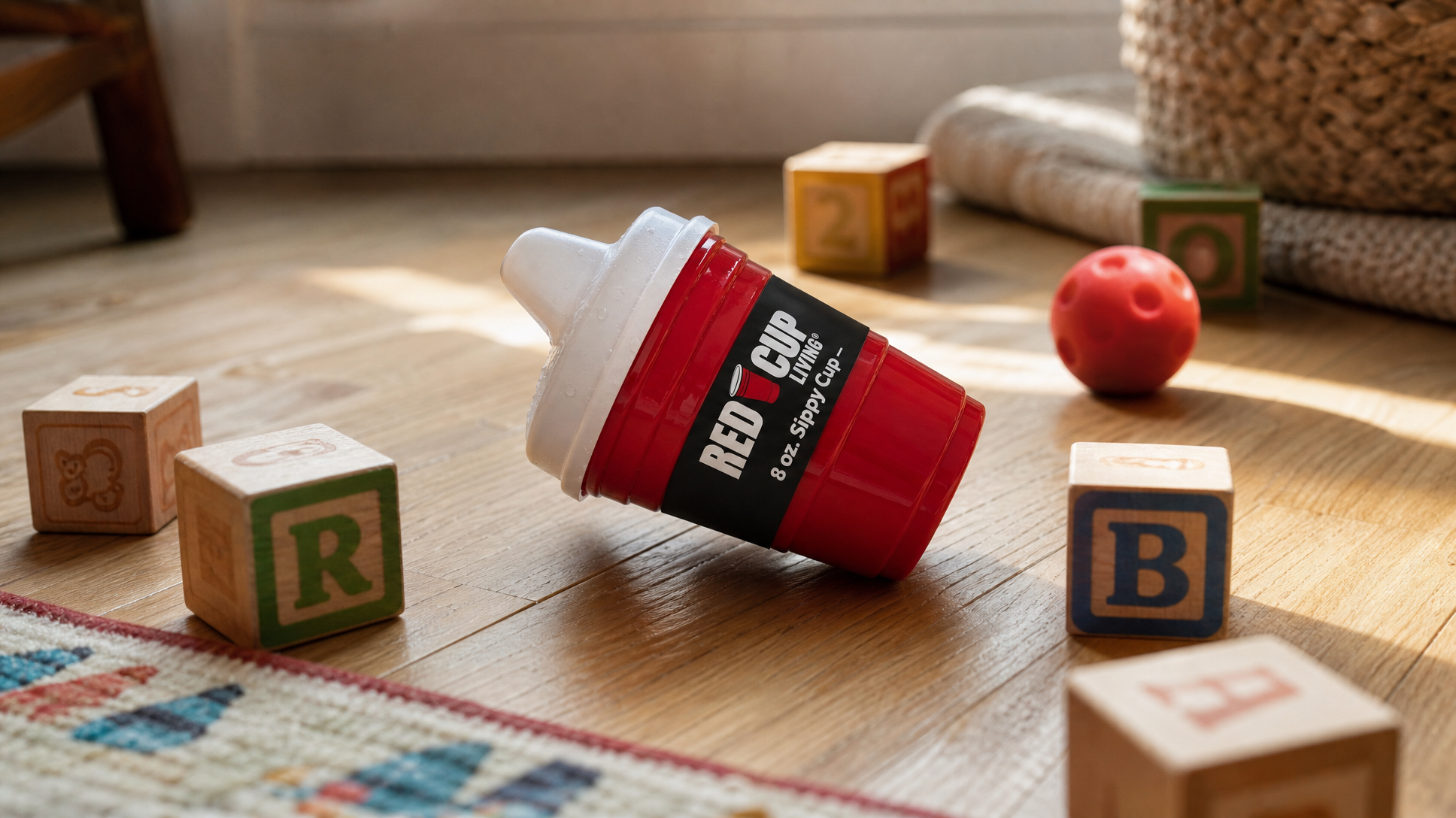
Double-wall ABS construction, like what's used in the Red Cup Living sippy cup, is genuinely unbreakable in the context of normal toddler use. The cup can take the drops. That durability is what makes it actually reusable — not just technically, but in practice, through the whole toddler phase.
The Real Math: One Good Cup vs. Three Cheap Ones
This is the argument that doesn't get made enough in eco-friendly parenting content. Buying a durable cup once is almost always the more sustainable choice — even if it costs a bit more upfront — because the environmental cost of manufacturing three replacement cups is higher than the cost of making one that lasts.
It's the same logic that applies to any reusable product: a water bottle that lasts five years beats five bottles that each last a year. The material has to be good enough to actually go the distance, or the "reusable" label is doing a lot of heavy lifting over not much substance.
For a sippy cup specifically, "going the distance" means surviving the dishwasher repeatedly, not warping or discoloring, holding a proper seal after hundreds of uses, and not cracking when it meets the kitchen floor at speed. That's a short list, but most cups fail at least one of those tests before a toddler is done needing them.
What to Actually Check Before You Buy a Sippy Cup
Skip the marketing language and run through this short checklist:
- BPA-free AND phthalate-free? Both, not just one.
- What plastic is it made from? Premium-grade ABS holds up significantly better than generic hard plastics.
- Is the lid genuinely leak-proof? "Spill-resistant" and "leak-proof" are not the same thing. Check what real buyers say about the lid after extended use.
- Is it dishwasher safe? Top-rack dishwasher safe matters — hand-washing a sippy cup every single day is a commitment most parents don't keep, and a cup that warps in the dishwasher stops being useful fast.
- Can a toddler actually hold it? The grip design matters more than it sounds. A cup that's too smooth or too tall for small hands gets dropped more, which accelerates wear even on durable materials.
The Red Cup Living 8oz Sippy Cup checks every one of these. It's built from double-wall ABS plastic, is BPA-free and phthalate-free, has a leak-resistant spill-proof lid, is top-rack dishwasher safe, and the ribbed red body gives little hands something to actually grip. It also holds 8 oz — a practical size for toddlers — and the design, styled after the iconic red cup, tends to get a reaction from parents that makes it a genuinely fun thing to hand a kid.
A Note on the "Eco" Side of This
ABS plastic isn't biodegradable, and it's worth being honest about that. The eco case for a cup like this isn't that it disappears cleanly at end of life — it's that it replaces a long series of shorter-lived cups that would have been thrown away much sooner. Durability is the sustainability argument here, not compostability.
If you're looking for a cup that genuinely reduces the plastic cycling in and out of your kitchen, the answer is the most durable cup you can find — not the most "natural" sounding one. A cup that lasts is a cup that doesn't get replaced.
Ready to stop replacing sippy cups every few months? Shop the Red Cup Living 8oz Kids Sippy Cup — one BPA-free, phthalate-free, unbreakable cup built to go the whole distance of the toddler phase.
Frequently Asked Questions
Is ABS plastic safe for toddlers to drink from?
Yes, when it's formulated to be BPA-free and phthalate-free — which the Red Cup Living sippy cup is. ABS (acrylonitrile butadiene styrene) is a durable engineering plastic used widely in consumer products. The key safety markers to confirm are the absence of BPA and phthalates, both of which are present here.
At what age can toddlers start using a sippy cup?
Many pediatric guidelines suggest introducing a sippy cup around 6 months, as babies begin transitioning from bottle feeding. The Red Cup Living sippy cup is designed for toddlers ages 6 months and up. As always, follow your pediatrician's guidance on timing for your specific child.
How do I clean the sippy lid properly?
The cup is top-rack dishwasher safe, which handles most cleaning needs. For the lid specifically, make sure it's positioned so water can reach the spout area. If you're hand-washing, a small bottle brush helps get into the spout opening to prevent any buildup over time.
What makes this sippy cup more eco-friendly than a standard disposable cup?
The eco case is durability. A cup built from unbreakable ABS plastic that survives the full toddler phase replaces multiple cheaper cups that would have cracked and been thrown away in the same timeframe. Less manufacturing, less waste — that's the real sustainability argument for a durable reusable cup.