


Unbreakable Outdoor Drinkware: What to Look for Before You Buy for Camping, Tailgates, and Backyard Parties

The Cup That Cracked on the First Drop
You've been there. New set of cups, first backyard party of the season, someone knocks one off the patio table — and it shatters like it was made of glass. The word "shatterproof" was right there on the packaging. So what gives?
The problem isn't that you bought cheap. It's that "shatterproof" and "unbreakable" are marketing words, not material specs. They mean different things depending on what the cup is actually made of, how thick the walls are, and whether the plastic was designed to handle heat, UV exposure, and the kind of casual abuse that happens at every real outdoor gathering.
This guide breaks down what those terms actually mean, what to look for before you buy, and what to skip — so your drinkware survives the season instead of the first weekend.
What "Shatterproof" Actually Means (And What It Doesn't)
Most outdoor cups marketed as shatterproof are made from one of a few plastic types: polypropylene (PP), SAN (styrene acrylonitrile), polycarbonate (PC), or standard styrene. The difference matters more than the label.
Polypropylene is the workhorse. It's flexible enough to absorb impact without cracking, holds up reasonably well to temperature changes, and is generally considered food-safe and BPA-free. It's the material behind most quality reusable party cups. When a cup is described as truly unbreakable in everyday use — meaning it can be dropped on concrete, stepped on, or thrown in a bag — polypropylene construction is usually why.
SAN and standard styrene look great on a shelf. They're clear, rigid, and feel premium. But rigid plastics crack under impact, especially in cold weather when plastic gets more brittle. "Shatterproof" on a SAN cup often means it won't shatter into a hundred pieces — it'll crack into three or four. Not exactly what you want barefoot on a patio.
Polycarbonate is tough, but it's the one material you want to double-check for BPA. Older PC drinkware often contained BPA; if a polycarbonate cup doesn't explicitly say BPA-free with a clear material callout, skip it.
The short version: look for polypropylene, look for BPA-free, and be skeptical of any cup that's both crystal-clear and claims to be unbreakable. True impact resistance usually comes with a slight opacity or a matte finish — that's the material doing its job.
Wall Thickness: The Spec Nobody Talks About
Material grade matters, but wall construction is what separates a cup that survives a season from one that warps by August. Thicker walls distribute impact better and resist deformation when a cup sits in a hot car, gets stacked at the bottom of a cooler, or gets squeezed by someone mid-conversation.
You can't always find wall thickness listed in product specs, so here's the practical test: hold the cup and squeeze the sidewall. If it flexes easily under light finger pressure, it'll flex and warp under real outdoor conditions. A well-built reusable cup should feel solid without being rigid — there's a slight give, but it springs back cleanly.
Also check the base. Thin bases are where most cups fail first — they crack on hard surfaces or warp from heat. A cup with a noticeably thicker base is built for the outdoors; a cup with a base that feels the same as the sidewall probably isn't.
Heat and UV Tolerance: The Summer Party Reality Check
A cup that survives a drop in October might not survive a July tailgate. Heat is a different kind of stress than impact, and most product listings don't address it at all.
Here's what actually happens to low-grade plastic in summer conditions: it warps. A cup left on a dark surface in direct sun can get hot enough to deform at the rim or base, which means it stops stacking properly, lids stop fitting, and it looks beat up after one afternoon. If you're hosting outdoors in summer — especially in the South or Southwest — this is a real issue, not a theoretical one.
Polypropylene handles moderate heat better than styrene-based plastics. It won't melt in your hand or in a car, but it's not designed for boiling liquids either. For outdoor cold drinks — beer, iced tea, lemonade, cocktails — it performs exactly as it should.
UV degradation is slower but real. Cheap plastic gets chalky, discolored, or brittle after extended sun exposure over multiple seasons. If you're buying drinkware you want to reuse for years, not just one summer, look for cups that are described as UV-stable or that come from brands with a track record of durable outdoor products. Color consistency after repeated outdoor use is a decent proxy for UV resistance — if the color fades fast, the material integrity is probably going the same direction.
The Lid and Straw Question
Outdoor drinking and lids go together — wind, movement, and the general chaos of a party mean an open cup is a spilled drink waiting to happen. But not all lid systems are created equal.
A lid that snaps on securely is worth more than one that just rests on top. Check whether the lid is designed specifically for that cup's rim diameter, or whether it's a universal fit. Universal-fit lids tend to pop off under pressure; purpose-built lids stay put. If the listing doesn't mention a snap or lock fit, assume it's a friction fit and plan accordingly.
Straws that come with outdoor cups should be reusable as well — a reusable cup with a single-use straw is a small but annoying contradiction. Look for a straw that's the right length for the cup depth and has enough diameter for thicker drinks if that's what you're serving.
Size and Capacity: Match the Cup to the Occasion
This one's simpler, but people still get it wrong. Buying a set of 16oz cups for a tailgate where everyone's drinking from cans is fine. Buying them for a backyard party where you're serving mixed drinks means everyone's back at the cooler every 20 minutes.
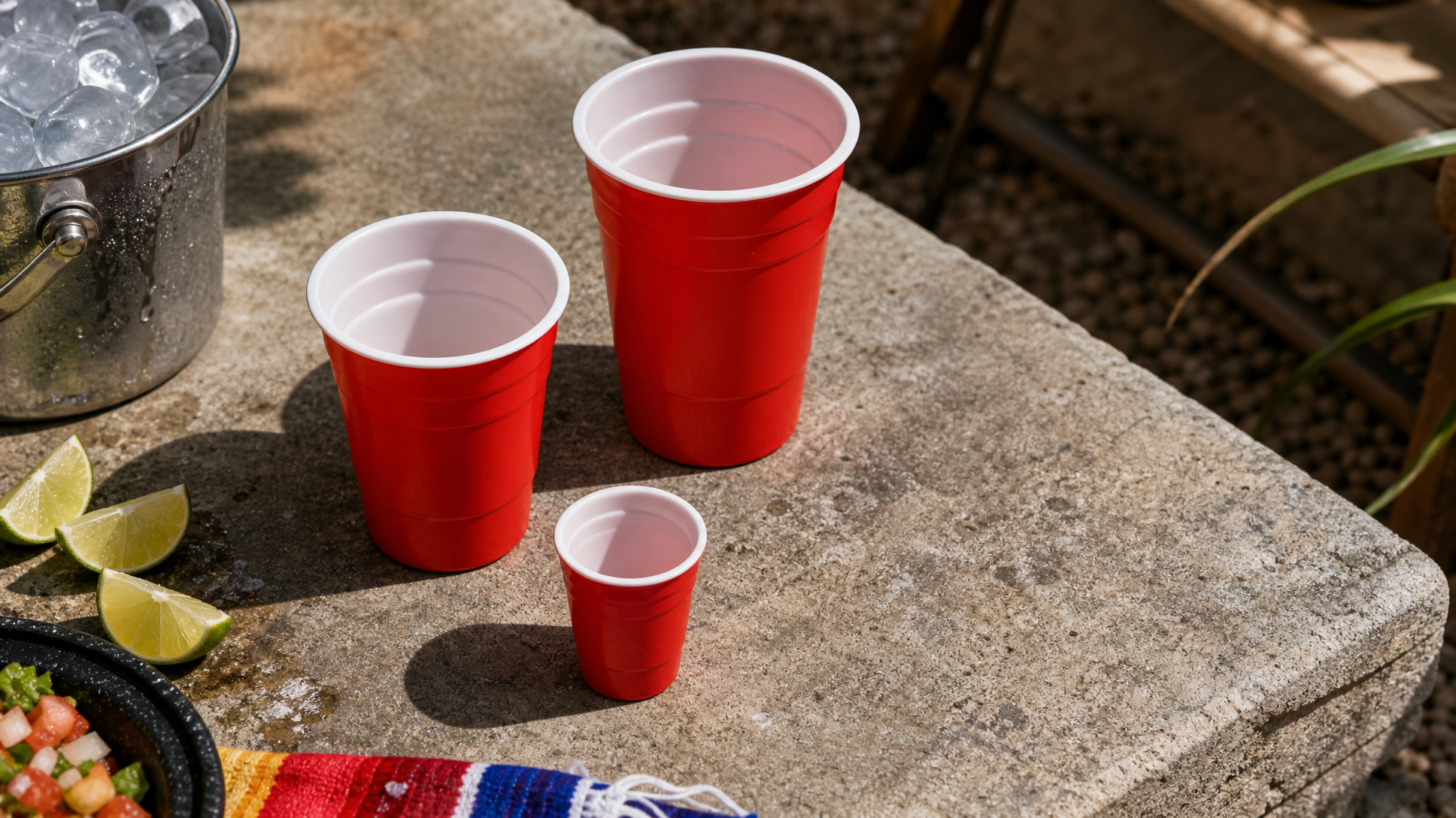
A practical outdoor drinkware lineup covers a few bases:
- A larger format cup (24–32oz) for beer, mixed drinks, and anything you want to stay cold longer. More volume means less frequent refills and more time actually enjoying the party.
- A mid-size option (12–16oz) for wine, cocktails, or guests who prefer a smaller pour.
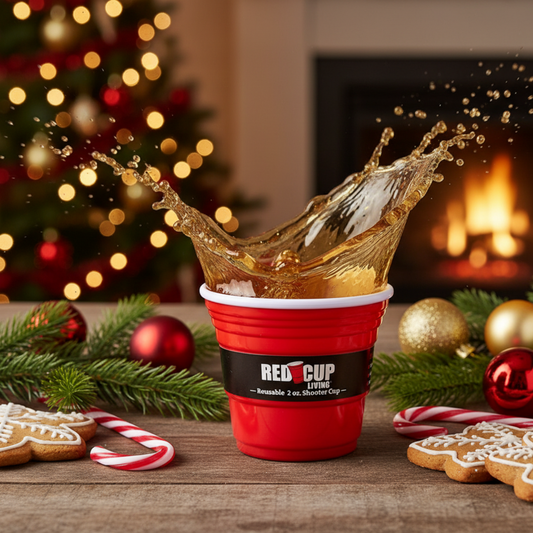
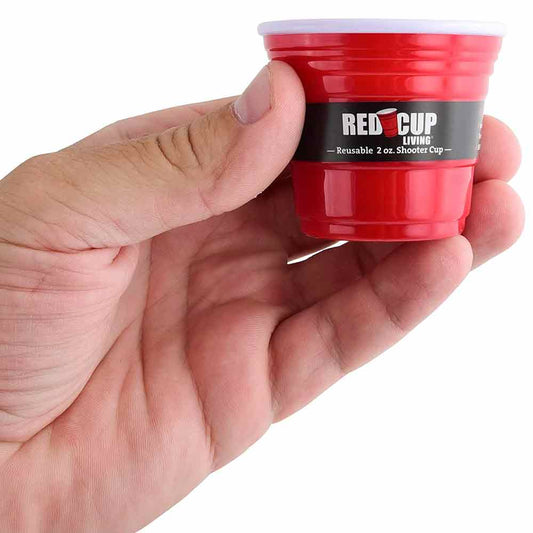
- Shot cups if your gathering involves toasts — reusable ones mean you're not hunting for a trash bag every time someone does a round.
Red Cup Living's lineup runs from 2oz shot cups up through 32oz party cups, which covers most outdoor hosting scenarios without needing to mix brands or sizes.
Dishwasher-Safe: Non-Negotiable for Reusable Drinkware
If you're switching from disposable cups to reusable ones — which is the whole point — the cups need to be dishwasher-safe. Hand-washing 40 cups after a party is not a sustainable habit. It's the reason people go back to single-use.
Check the bottom of the cup or the product listing for the dishwasher-safe symbol or explicit callout. Top-rack safe is the most common designation for plastic drinkware; bottom-rack heat can warp lower-grade plastics. If the listing just says "easy to clean" without specifying dishwasher-safe, that's a red flag — it usually means hand-wash only.
Polypropylene cups that are genuinely dishwasher-safe will say so clearly. It's a feature worth paying a little more for, because it's what makes reusable drinkware actually practical instead of just aspirationally eco-friendly.
The Real Cost Comparison
Here's the math nobody does before they buy disposables: a bag of single-use red cups gets used once and goes in the trash. Do that a few times a summer and you've spent real money on something you threw away, plus you're hauling a trash bag full of cups at the end of every party.
Quality reusable drinkware costs more upfront. That's just true. But spread across a full season of gatherings — or multiple seasons, if the cups are actually built to last — the per-use cost drops fast. The break-even point comes sooner than most people expect, especially if you're buying in bulk for larger parties.
The bulk party pack options at Red Cup Living are priced to make that switch easier — the per-cup cost at volume is competitive with disposables, without the ongoing repurchase cycle.
What to Actually Check Before You Buy
Run through this before adding anything to your cart:
- Material: Is it polypropylene? Is it explicitly BPA-free?
- Impact resistance: Does the brand describe it as unbreakable, or just shatterproof? Unbreakable is a stronger claim — hold them to it.
- Wall construction: Does the listing mention thick walls or reinforced base? If not, check reviews for warping or cracking complaints.
- Dishwasher-safe: Explicitly stated, not implied.
- Lid system: Snap-fit or friction-fit? Does it come with a compatible straw?
- Size range: Does the brand offer multiple sizes so you can build a cohesive set?
If a cup clears all six, you're buying drinkware that'll actually last — not just survive the product photo.
Browse Red Cup Living's full lineup of unbreakable, BPA-free outdoor cups — from 2oz shooters to 32oz party cups — and find the right setup for your next gathering.
Frequently Asked Questions
What's the difference between shatterproof and unbreakable drinkware?
"Shatterproof" typically means the cup won't explode into tiny fragments when dropped — but it can still crack or split. "Unbreakable" is a stronger claim, usually backed by a more impact-resistant material like polypropylene, which flexes on impact rather than fracturing. When buying outdoor drinkware, look for unbreakable over shatterproof, and check that the material claim is backed by a BPA-free, polypropylene construction.
Are reusable plastic cups safe to leave in the sun at outdoor parties?
Quality polypropylene cups handle moderate outdoor heat well for cold drinks — beer, iced cocktails, lemonade — without warping during normal use. That said, leaving any plastic cup sitting on a dark surface in direct summer sun for extended periods can cause deformation over time, especially with thinner-walled cups. Store cups in shade or a cooler bag when not in use, and look for cups described as UV-stable if you're buying for repeated outdoor seasons.
Can I put reusable party cups in the dishwasher?
Many quality reusable plastic cups are dishwasher-safe — but always check the product listing or the bottom of the cup for an explicit dishwasher-safe callout. Top-rack placement is standard for plastic drinkware. If the listing only says "easy to clean" without specifying dishwasher-safe, assume hand-wash only. Dishwasher compatibility is one of the most important practical features to confirm before buying reusable drinkware for parties.
How many reusable cups do I need for a backyard party?
A general rule of thumb: plan for at least one to two cups per guest, depending on how you're managing the event. If guests are keeping track of their own cup throughout the party, one per person works. If cups are being set out communally or you expect some to go missing in a big crowd, having extras on hand prevents the mid-party scramble. Buying in bulk party packs is the most cost-effective way to stock up, and reusable cups mean you're building a collection that carries over to the next gathering.